
Fire Design of Post-Installed Rebar Applications
Fire incidents remain a major risk to life and property, potentially weakening concrete structures and causing collapse. Structural fire safety is therefore essential in building codes such as the Eurocodes, which set minimum fire resistance requirements for structural elements and connections to ensure safe evacuation, effective rescue, and controlled fire suppression.
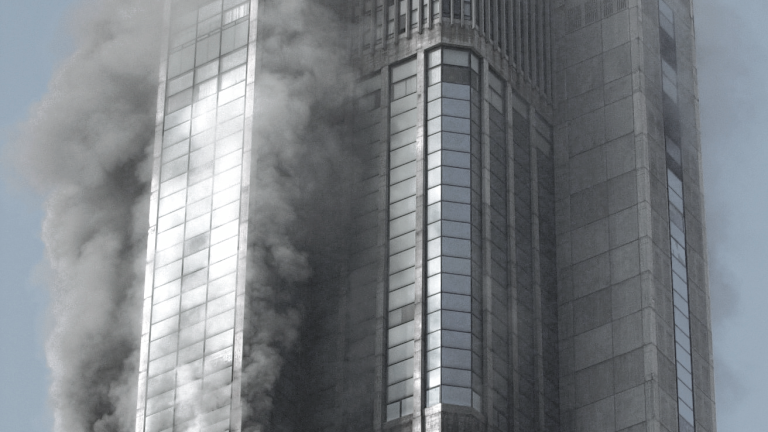
The importance of structural safety in event of fire exposure
1. INTRODUCTION
Fire incidents remain a significant threat to life and property across all types of structures, with the potential to compromise the stability of concrete elements and lead to partial or complete collapse. Structural fire safety is therefore a fundamental requirement in all major building codes including the Eurocodes. Eurocodes prescribe minimum fire resistance durations for structural components and their connections to ensure safe evacuation, effective rescue operations, and controlled fire suppression among other fire safety related requirements (see Fig. 1).

Fig. 1. Requirements for safety in all types of building structures
Post-installed rebars are widely used to connect concrete elements cast at different times, creating monolithic behavior between existing and new members. They offer reliable, fast, and economical solutions for both planned and unforeseen construction needs. The need for post-installed rebars frequently arises out of unplanned situations where dowel/starter cast-in reinforcing bars (rebars) or couplers were missed out. However, the need can also be in planned construction activities to optimize and speed up the workflow. Moreover, the requirement for such connections is of high relevance in strengthening/retrofitting of building and civil structures.
While building codes provide clear guidance for fire design of traditional reinforced concrete systems typically using tabulated data or simplified methods, alternative construction methods such as using post-installed rebars require more advanced design approaches and engineering judgment due to the distinct thermal and physical behavior of injection mortars compared to concrete and steel. It remains the structural engineer’s responsibility to ensure such systems meet prescribed fire safety requirements.
Let’s dive deep into the procedure for fire design of post-installed rebar applications.
2. CLASSIFICATION OF POST-INSTALLED REBAR APPLICATIONS
The application range of post-installed rebar connections can be broadly divided into lap splices used for extending members such as slabs, beams, walls, or columns and end anchorages, which connect elements like slabs to walls or columns to slabs, with or without acting moments (see Fig. 2)

Fig. 2. General classification of post-installed rebar applications
Simply supported end anchorages transfer shear or axial loads without moments, as in a slab supported on a wall. However, in practice, many connections behave assemi-rigid or rigid joints, developing moments due to partial or full fixity between concrete elements such as columns, walls, or slabs. The EN 1992-1-1 design provisions limit such rigid connections to lap-splice configurations, which may not always be feasible in retrofit or staged construction scenarios. To address this, EOTA Technical Report TR 069 provides a design methodology that enables rigid end anchorages to be executed using straight post-installed rebar connections, eliminating the need for splice configurations in existing members.
3. BASIC DIFFERENCE BETWEEN CAST-IN REBAR AND POST-INSTALLED REBAR UNDER FIRE EXPOSURE
The behavior of post-installed rebars under fire exposure differs significantly from cast-in rebars due to the distinct thermal and mechanical properties of injection mortars (see Fig. 3). The bond strength of organic mortars deteriorates rapidly with increasing temperature, and the extent of degradation is highly product dependent. Since organic and hybrid mortars lose capacity at much lower temperatures than steel or concrete, understanding their time–temperature-dependent bond reduction is essential for an accurate fire design. Hilti’s HIT-FP 700-R was developed as an injectable inorganic calcium-aluminate-based cement mortar and experiences a very low reduction of its bond capacity at elevated temperatures beyond 500°C.

Fig. 3. Performance reduction curve of injection mortar, concrete and steel under fire exposure.
The temperature distribution profile in post-installed rebar applications is influenced by the concrete cover, embedment length and fire exposure time. For post-installed rebar applications using lap splices, the temperature distribution along the embedment length is usually constant, for most common scenarios (see Fig. 4a). In end-anchorage applications, temperature distribution usually varies along the embedment depth of the post-installed rebar (see Fig. 4b).

Fig. 4. Typical temperature distribution in post-installed rebar connection
4. DESIGN FRAMEWORK AND THE MISSING LINK
Design of post-installed rebar is not directly addressed in EN 1992-1-1 (static) and EN 1992-1-2 (Fire). The approaches for fire design verification for cast-in rebars are given in EN 1992-1-2 in the form of:
Tabulated data: Using minimum concrete geometry and cover for different fire exposure classes.
Simplified calculation: Reduced cross-section analysis under fire using isotherm or zone method.
Advanced method: Advanced thermal–mechanical finite element simulations of the entire structure.
The tabulated data approach is the most commonly used in practice and it revolves around the principle that detailing of the structural member is as such that the temperature in the reinforcing steel never exceeds 500°C. Under such conditions the fire design case is not decisive. This approach cannot be directly applied to post-installed rebars, as organic mortars lose bond strength rapidly at temperatures much lower than the 500 °C (see Fig. 3). This often necessitates greater concrete cover or deeper embedment lengths—solutions that may be impractical or uneconomical for existing members. Furthermore, current design provisions in EN 1992-1-1 restrict post-installed rebar applications to lap splices and end anchorages without moments. To address this limitation, EOTA TR 069 introduced a design method for end-anchorage connections with acting moments based on improved bond-splitting behavior. While previously limited to static and seismic cases, EOTA TR 069 now includes a fire design methodology, enabling engineers to design such moment-resisting post-installed rebar applications for fire ratings up to 240 minutes, closing a critical gap in structural design (see Table 1)
Table 1. Design framework of post-installed rebar applications

5. FIRE DESIGN OF POST-INSTALLED REBAR APPLICATIONS
In static design, the partial safety factors for actions and material resistances are selected to maintain a conservative margin of safety against normal working life conditions. For example, design loads are generally increased (γG= 1.35 for permanent actions, γQ= 1.5 for variable actions), while material strengths are reduced (γM= 1.15 for steel, 1.5 for concrete). These values help ensure adequate reliability against failure during the structure’s lifetime.
However, under fire exposure, the design philosophy shifts from preventing any failure to maintaining structural stability for the required fire resistance duration (R). Since the probability of a fully developed fire coinciding with peak static design loads is low, EN 1992-1-2 allows reduced safety factors in the fire design situation typically γM,fi = 1.0 for materials and a load reduction factor 𝜂𝑓𝑖 ≈ 0.7 applied to the static design load effects Ed. This differentiation of lower design loads and material factors in fire design is the basis of the tabulated data approach used in EN 1992-1-2, where the tabulated minimum member sizes and concrete covers are provided, assuming reduced load levels and material strength factors. This ensures fire design without the need for further analysis.
Design of lap splice length under fire exposure:
The design of splice length can be calculated using the same design provisions for a static load case in section 8 of EN 1992-1-1. However, the reduced bond strength capacity from the relevant ETA for fire (fbd,fi) shall be used instead of fbd,PIR. The design bond strength under fire (fbd,fi) reduces with increasing temperature. This curve is then translated into the reduction factor kfi(θ) by calculating the ratio of the bond strength values to the reference value for cast-in-rebar for the respective concrete class (refer Fig. 5).

Design of end anchorages (without acting moments) under fire exposure as per Eurocode:
The principles of design for fire exposure are similar to design for lap splices, using a similar approach of reduced bond strength capacity from the relevant ETA. However, for end anchorages/intersection connections, the temperature distribution usually varies along the embedment length of the rebar (see Fig. 6). The design bond stress at a position ‘x’ along the anchorage length from the interface under fire (fbd,fi) is calculated and fire bond resistance (NRd,fi) for an assumed design anchorage length of post-installed rebar is determined using integration method which shall not be smaller than NEd,fi , requiring an iterative design process.
The Eurocode provisions for fire design of end-anchorages are only valid for simply supported anchorages (without acting moments) and not for applications with acting moments. Engineering judgement is required to consider the effect of partial fixity in concrete connections on the top rebar in such simply supported end-anchorage applications.

Fig. 6. Design of end anchorages without acting moments under fire exposure as per Eurocode
Design of end anchorages with acting moments under fire exposure as per EOTA TR 069:
For evaluating concrete cone failure resistance under fire conditions, a temperature-based method is used. Unlike the time-based method, this approach is not limited by fire duration and remains valid for arbitrary fire exposure times, including those exceeding 120 minutes (up to 240 minutes and potentially beyond it). The determination of concrete cone design resistance NRd,c,fi for a specific fire exposure duration shall be established following steps provided in EOTA TR 069 provisions.
For evaluating the pull-out and splitting design resistances, the pullout and splitting reduction factors (as functions of temperature) from the relevant ETAs are used to derive the resistance degradation curves based on the application’s temperature profile (refer Fig. 7). The design anchorage lengths for splitting and pull-out resistances are calculated and the total fire load capacity using the integration method.

6. Hilti product solutions for fire design of post-installed rebar in New Zealand
Hilti offers a portfolio of injection mortars approved for fire design of post-installed rebar connections which are HIT-FP 700-R, HIT-HY 200-R V3 and HIT-RE 500 V4. They are preferred solutions for fire design, even for applications with acting moments and fire requirements (R) even up to 240min.
7. DESIGN USING PROFIS ENGINEERING SOFTWARE
To start with your fully code-compliant and safer concrete-to-concrete connection designs, use Hilti’s proprietary software Profis Engineering for quick, efficient and reliable solutions. With its advanced post-installed rebar module, PROFIS now incorporates latest fire simulations with various parameters allowing designers to evaluate more realistic rebar and injection mortar performances under elevated temperatures. PROFIS allows choosing fire exposure durations up to 240 min for any post-installed rebar application, or the user is allowed to give manual input of rebar temperature as well. The choice of fire exposure sides for different applications will also be soon made available in PROFIS. The software enables quick comparison of different qualified injection mortars under multiple load actions (static, seismic, and fire) and instantly shows the governing case, saving time and improving accuracy.

8. HILTI SPEC2SITE SOLUTIONS
Since Hilti offers a range of qualified solutions for structural post-installed rebar connections under fire exposure, we want to make it easy for our users to navigate through and select the best solution for their applications. We do this by offering our SPEC2SITE solutions making your project applications more productive, safer and more sustainable. SPEC2SITE solutions offer a comprehensive portfolio to cover fire design needs for post-installed applications together with differentiated design methods, qualified products, design software, services, literature content in engineering center and our direct sales force (see Fig. 8)

In case you need more information and support for the fire design of your post-installed rebar applications, refer to Hilti's Whitepaper on fire design in post-installed rebar applications
For further enquiry or clarifications, please feel free to reach out to your local Field Engineer or send an email to our Engineering department: NZEngineers@hilti.com