
Ensuring Fastener Safety with the Use of Quality Threaded Rods
Explore how the quality of threaded rods directly influences fastener safety in post-installed bonded anchor systems. This article presents independent testing findings, highlights common non-conformances in the market, and outlines key considerations for ensuring reliable, code-compliant structural connections.
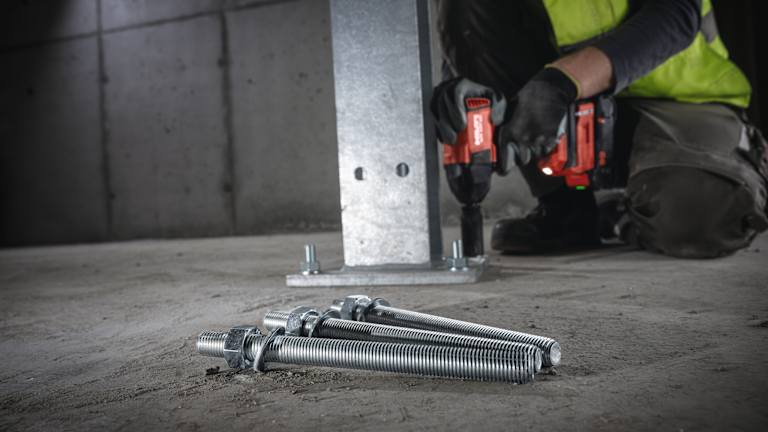
More Peace of Mind with Quality Piece of Steel
1. INTRODUCTION
Threaded rod assemblies are integral part of post-installed bonded anchors, making their quality paramount in ensuring fastener safety. Bonded anchors are extensively utilized to establish structural connections between existing and new building components, such as "steel-to-concrete" or "concrete-to-concrete" connections. The failure of these connections can pose a significant risk to human lives and lead to substantial economic losses. Hence, it is imperative to ensure that threaded rods are fit for purpose when used in anchoring applications.
In order to evaluate the potential variations in quality of similar products available by various suppliers in the market, Swinburne University of Technology (SUT) was commissioned by Hilti to conduct a comparative testing program. The samples had been sourced from the open market and supplied to SUT as 11 bundles, assuming each bundle originated from a different supplier. The selection of the bundles and the methodology employed for sample collection were not disclosed to SUT, ensuring an unbiased evaluation. The assessment encompassed geometry, mechanical properties, and material properties, with all testing conducted at SUT's Materials Laboratory and Smart Structures Laboratory in Hawthorn, Victoria. The main objective was to compare the attributes and quality of these products sourced from various suppliers, considering their crucial role in fastener safety when utilized in safety-critical anchoring applications.
The tests were conducted in accordance with the relevant Australian and international standards, as determined by SUT. Following the completion of tests, the results revealed several non-conformances against the specified standards. Remarkably, most tested rods exhibited a higher property class than what was claimed in marketing literature and product markings, raising concerns regarding the accuracy of information available in the market. Furthermore, most nut samples, with the exception of those from one supplier, demonstrated at least one non-conformance, highlighting a general trend within the industry. Similarly, half of the bundles of washers exhibited at least one nonconformance, further emphasizing the need for greater attention to the quality of these components. The insights gained from this investigation provide vital conclusions to building professionals, enabling informed decision-making processes for the selection and design of post-installed bonded anchoring products. The study's findings hold significant implications for enhancing fastener safety and mitigating the risks associated with bonded anchors.
2. SUMMARY OF TEST RESULTS
During the material tests, it was observed that all threaded rods exhibited the appropriate metallic phase corresponding to their designated property class, and no anomalies arising from the heat treatment process were detected. The materials utilized in all threaded rod bundles were found to be in compliance with the requirements outlined in the referenced standards for their designated property class. However, a majority of the threaded rods, with the exception of one bundle, exhibited a hardness value exceeding the specified property class. This deviation from the expected hardness is considered a non-conformity within the bolting literature.
Furthermore, the proprietary nuts provided within four bundles displayed non-conformities in terms of the limiting dimensions of the thread. Additionally, with the exception of one bundle, all tested nuts exhibited one or more non-conformances. Notably, seven bundles out of eleven had nuts not meeting the minimum nut height requirement of the referenced standards. These nuts having less than the minimum number of engaged threads required to achieve the full capacity of the bolt are susceptible to thread stripping failure during tensile tests, meaning that the full theoretical strength of the rods is not effectively utilized.
During the proof load tests, one assembly failed to achieve the specified load due to the poor quality of the supplied nut, indicating a severe non-conformity. Alarmingly, the same assembly, along with four other assemblies, also failed to meet the minimum ultimate tensile load for the designated property class. These products are not fit-for-purpose and constitute non-conformances caused by the poor-quality nuts. The data presented in this report strongly suggests that the quality of the nuts is a significant concern. It is worth noting that the poor-quality nuts are a prevalent issue within the industry as a whole, based on our collective experience.

3. CONCLUSION
The study has unveiled numerous non-conformities of randomly selected threaded rod assemblies available in the market for post-installed bonded anchor connections. These findings underline the critical necessity of careful product selection, preferably by adhering to three levels of quality assurance, such as prequalification, design and verification. Building professionals have a shared responsibility to ensure that the selected fastener had been qualified “fit-for-purpose” in accordance with local codes and industry standards. When specifying safety-critical bonded anchor connections, preference shall be made towards complete system solutions by reputable suppliers, the components of which were tested and assessed as a whole and certified in the relevant prequalification document.
Considering the large variations in quality discovered by this study, the substitution of proprietary rod assemblies by third-party products carries serious risks of poor fastener performance or premature anchor failure. The verification of post-installed connections therefore should follow rigorous design standards, which were developed harmoniously with stringent qualification guidelines. When using commercial threaded rods assemblies as substitution to the ETA-approved systems, Inspection Certificate 3.1 according to EN10204 shall be supplied by manufacturer as an assurance that the materials supplied are tested and conform to the customer’s requirements. This Inspection Certificate 3.1 must be validated by the manufacturer’s authorized inspection representative.
ACKNOWLEDGEMENT
This short article was written based on the testing and assessment of threaded rod assemblies carried out at the Materials Laboratory and Smart Structures Laboratory of the Swinburne University of Technology (SUT) in Melbourne, Australia. The study was sponsored by the Hilti Corporation, Lichtenstein.
REFERENCES
[1] Fernando S., Hilti Australia threaded rod comparison test, Hawthorn, Swinburne University of Technology, 2023.
[2] B.Kaknics, R.W.S.Chong – Comparative Testing of Threaded Anchor Rods Supplied by Different Manufacturers