

Why it is important and how to choose the right protection in different environments
The Golden Gate Bridge, the iconic large suspension bridge connecting San Francisco Bay and the Pacific Ocean, is a great example of how corrosion is a critical factor when it comes to structural steel work. The bridge´s corrosion coating has been touched up since the mid-60´s and still being maintained to preserve the structure against corrosion. According to the American Galvanizers Association, if the structure would have been initially completely hot dip galvanized, this would have led to 15% higher cost in construction but would have also saved around $1 billion in maintenance and repair up to now.
How do I choose the right corrosion protection then?
Investment in proper corrosion protection from the start pays off in the long run; nonetheless, evaluating and choosing the appropriate material is not an easy task. There are, in fact, several factors which must be considered when it comes to corrosion assessment: type of corrosion and related classes, environmental parameters and resistance categories. With this series of articles, we aim at raising your general awareness of what corrosion is all about, how to properly choose the right protection and give some advice.
Basics of corrosion
Corrosion is the physicochemical interaction between a metal and its environment, which results in changes in the metal’s properties, and which may lead to significant functional impairment of the metal, the environment, or the technical system of which they form a part (see ISO 8044:2010).
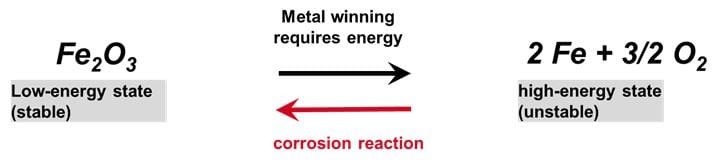
With the metals commonly used in engineering, such as carbon steel, stainless steel, zinc, copper and aluminum, the typical corrosion process can be regarded as the thermodynamically favored reverse reaction of the metal-winning (extraction) process.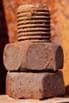
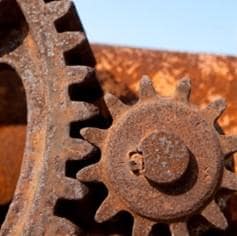
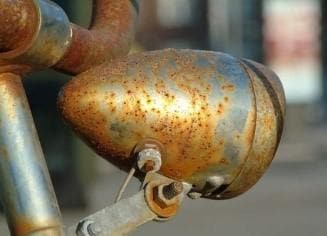
The corrosion reaction is electrochemical in nature and can be separated in two half reactions
Understanding the different types of corrosion
Uniform corrosion is the most conventional form of corrosion. It leads to uniform distribution of the corrosion products (e.g. red rust on steel). The extent of this corrosion reaction can usually be well estimated. The rate of corrosion is given in micrometers per year (μm/a). Using these average values, it is possible to calculate the life expectancy of a component, and thus to enhance its life expectancy by increasing its thickness.
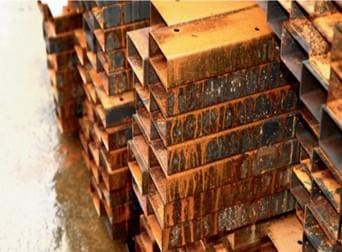
Pitting corrosion is a localized corrosion that leads to the creation of small holes or “pits” in the metal. The holes are localized and can progress very rapidly in depth, while the rest of the surface remains undamaged. The corrosion initiating process starts with a local break-down of the passive layer. Stainless steels are particularly susceptible to pitting corrosion, as well as other passive metals such as aluminium and their alloys.
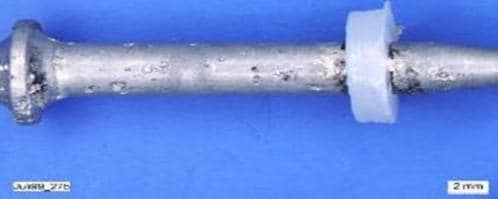

Hydrogen induced cracking involves conjointly corrosion and straining of the metal due to applied or residual stress. This type of corrosion is a combined mechanical and electrochemical corrosion process that results in cracking of certain materials. Internal stresses in a material can be enough to initiate the failure.
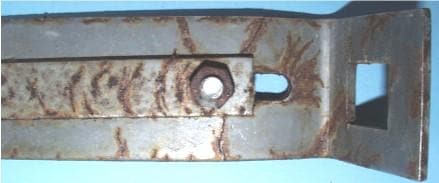
Stress corrosion cracking can be induced by chlorides or hydrogen formation during the corrosion reaction. A dangerous source of hydrogen is the corrosion of zinc coatings. This limits the use of zinc coated high strength products in dry indoor environments.
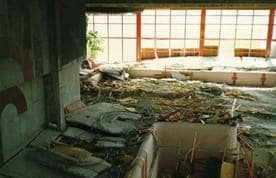
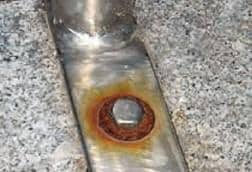
Crevice corrosion is a localized form of corrosion occurring in cracks or crevices formed between two surfaces made of the same metal, different metals or even a metal and a non-metal. It is initiated by the restricted entrance of oxygen from the air into the crevice area, leading to different concentrations of dissolved oxygen.
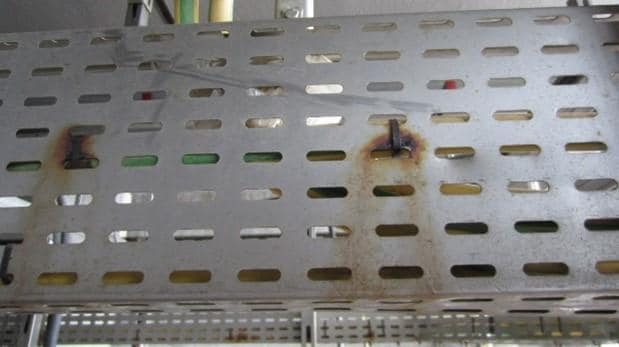
Bimetallic (galvanic, contact) corrosion occurs where two dissimilar metals have an electrically conducting connection and are in contact with a common corrosive electrolyte. Generally, the less noble metal will be dissolved, whereas the more noble part is not attacked by corrosion. A positive example is the way zinc protects carbon steels and low-alloyed steels: zinc is the less noble metal, which actively protects steel by being corroded itself.
Why is corrosion assessment critical?
The proper corrosion protection must be chosen from the beginning, as wrong corrosion protection can lead to limited lifetime and expensive rework or to catastrophic failures.
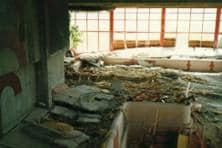
Uster, 1985: wrong grade of stainless steel in indoor swimming pool led to failure of fixtures of the suspended ceiling
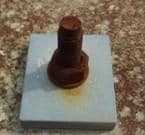
Electroplated HDA after 7 years in coastal climate. Typical lifetime of 50 years in construction will not be reached.
Corrosion protection to ensure lifetime and cost savings
Corrosion is a ubiquitous natural process. Most of us, at some point in our everyday lives, become familiar with the effect that corrosion has on rusted steel parts. Corrosion has a huge economic impact. About a fifth of the world’s annual steel production goes towards simply replacing steel parts damaged by corrosion. Even though it may involve higher up-front cost, correct and efficient corrosion protection at the source helps save money and resources in the long run.
Shielding metals against corrosion is imperative to ensure and even extend the lifetime of the material and overall application: environmental conditions, oxidation, abrasion and several other phenomena can compromise the lifetime of the installation, but with a correct, proper protection this can be secured and eventually prolonged, consequently, avoiding incurring additional costs for repair or replacement.
In the next article, we will guide you through the behaviour of the materials used to protect the most common applications from corrosion.
You can also ask us for support: just leave a comment or post your question in the community or build up extra competence through our Webinars or Hilti Academy trainings.